imageimage
Schedule a Call

Get in Touch

  • Email Now
    contact@indusvalley.io
  • Headquarters
    Long Meadows Road Bedminster, New Jersey, 07921 United States
Social Link
  • Instagram
  • LinkedIn
  • X
  • Facebook
  • Youtube
  • Home
  • Services
    • AI Development
      • Generative AI
      • Machine Learning
      • Predictive Analytics
    • Mobile App Development
      • iOS App Development
      • Android App Development
      • Cross Platform App Development
    • Web Development
    • Digital Marketing
      • SEO
      • Social Media Marketing
      • Performance Marketing
      • Content Marketing
    • Design
      • UI/UX Design
      • Logo & Branding
      • Video Animation
    • IT Staff Augmentation
    • Cloud Services
  • IVY
  • Chat With IVY
  • Portfolio
  • Game Dev
  • Blogs
  • About Us
  • Contact Us
imageimage
image
  • Home
  • Services
    • AI Development
      • Generative AI
      • Machine Learning
      • Predictive Analytics
    • Mobile App Development
      • iOS App Development
      • Android App Development
      • Cross Platform App Development
    • Web Development
    • Digital Marketing
      • SEO
      • Social Media Marketing
      • Performance Marketing
      • Content Marketing
    • Design
      • UI/UX Design
      • Logo & Branding
      • Video Animation
    • IT Staff Augmentation
    • Cloud Services
  • IVY
  • Portfolio
  • Game Dev
  • Blogs
  • About Us
  • Contact Us
  • Sun-Tue (9:00 am-7.00 pm)
  • infoaploxn@gmail.com
  • +91 656 786 53
Get in Touch
Schedule a CallLet's Talk

Developer Insights & Best Practices / A Deep Dive into the Model Context Protocol: The Universal Port for Agentic AI

A Deep Dive into the Model Context Protocol: The Universal Port for Agentic AI
2/16/2026 | Shahzaib Mazhar

A Deep Dive into the Model Context Protocol: The Universal Port for Agentic AI

Introduction: The Dawn of Context-Aware AI 


The rapid evolution of artificial intelligence has brought forth powerful systems, with large language models (LLMs) standing as a testament to this progress. These models, trained on vast static datasets, exhibit remarkable capabilities in natural language understanding and generation. However, a fundamental architectural limitation persists: the knowledge they possess is frozen in time. An LLM operates by predicting answers based on its training data, not by accessing or processing real-time, external information.1 This inherent constraint gives rise to a critical challenge: the inability to act on current information and the propensity for "hallucinations"—the generation of plausible but factually incorrect information.1 

This paradox highlights a crucial need for a new layer of infrastructure. An LLM, in its foundational form, is a static, predictive engine. To transcend this limitation and evolve into a dynamic, "agentic" system capable of real-world interaction, it requires a standardized, reliable mechanism to access and operate on dynamic information. The solution to this challenge has arrived in the form of the Model Context Protocol (MCP). 

Introduced by Anthropic in November 2024, the Model Context Protocol is an open standard and open-source framework designed to standardize the way AI systems integrate and share data with external tools, systems, and data sources.1 The protocol acts as a secure, standardized "language" that allows LLMs to move beyond their static knowledge base and become dynamic agents that can retrieve current information and take action.1 A powerful analogy for MCP is the USB-C port for AI applications. Just as a USB-C port provides a universal connector for devices to interface with a wide range of peripherals and accessories, MCP provides a standardized way to connect AI models to diverse data sources and tools, fostering a unified ecosystem.1 

The strategic decision to make MCP an open standard and open-source framework is not merely a technical choice; it is a deliberate move to position the protocol as an industry-wide solution that avoids vendor lock-in and encourages widespread adoption.2 This approach mirrors the success of other open protocols like the Language Server Protocol (LSP), which standardized the integration of programming language support across various development tools.5 By providing a common interface, MCP is poised to become a foundational layer for all future agentic AI applications, from AI-powered IDEs to complex conversational assistants and automated workflows. 

This report will provide a comprehensive breakdown of the Model Context Protocol, starting with its core architecture and the strategic advantages it offers developers. It will then demonstrate a practical application by detailing the step-by-step development of an MCP server that retrieves financial data, before concluding with a discussion of the broader implications for the future of agentic AI. 


Part 1: Deconstructing the Model Context Protocol 


The Model Context Protocol establishes a new paradigm for how LLMs interact with the external world. While it builds upon existing concepts like tool use and function calling, it elevates them by providing a clear, open, and standardized framework.1 The foundation of this protocol is a robust communication standard. The protocol’s reliance on JSON-RPC 2.0 messages signifies a commitment to an established, lightweight, and language-agnostic communication standard.1 This design choice is critical for ensuring that an MCP server can be developed in any programming language and seamlessly communicate with an MCP client, promoting broad interoperability and accelerating the growth of a diverse ecosystem. 


The Architectural Blueprint: Hosts, Clients, and Servers 


MCP’s architecture is built on a clear separation of concerns, with three primary components working in concert to facilitate communication between an LLM and external systems.1 

  • MCP Host: The host is the AI application or environment where the LLM resides, serving as the user’s primary point of interaction. Examples include conversational AI assistants, AI-powered IDEs, or custom applications that process requests requiring external data or tools.1 
  • MCP Client: Positioned within the MCP host, the client is a crucial connector. Its primary role is to translate requests from the LLM into a format the MCP server can understand and to convert the server’s replies back into a format the LLM can interpret. It is also responsible for discovering and managing connections to available MCP servers.1 
  • MCP Server: The server is the external service that provides the actual context, data, or capabilities to the LLM. It acts as a bridge, connecting to external systems such as databases, web APIs, or proprietary business software and translating their responses into a standardized format.1 


This layered architecture is a core principle of sound software engineering. By decoupling the user interface (Host), the communication logic (Client), and the external data sources (Server), the system becomes highly modular and scalable. A developer building an AI-powered IDE, for instance, can focus on creating an exceptional user experience without needing to understand the intricacies of a specific financial API. They only need to know how to interface with the MCP Client, which in turn manages the complexity of communicating with a financial data server. This modularity fosters independent development and promotes reusability, allowing a single, well-built MCP server to be used by countless different hosts. 

Communication between these components is handled by the transport layer, which primarily uses JSON-RPC 2.0 messages.1 The specification recommends two main transport methods: Standard Input/Output (stdio) for local resources, offering fast, synchronous message transmission, and Server-Sent Events (SSE) for remote resources, which is ideal for efficient, real-time data streaming.1 


Beyond Retrieval: The Power of Tools, Resources, and Prompts 


One of the most powerful aspects of the Model Context Protocol is its comprehensive approach to categorizing an LLM’s external interactions. A server can offer three distinct types of capabilities, each designed to model a different kind of agentic behavior 5: 

  • Resources: These are structured data or content that provides passive context to the LLM or user. They are typically managed by the application (Host/Client) and can include information like the contents of a file or a repository’s git history.7 The protocol recognizes that an LLM often needs to 
  • read information before it can act on it. 
  • Prompts: Prompts are pre-defined templates or workflows that are presented to the user for invocation. They are user-controlled and can be triggered by explicit user choices, such as a slash command or a menu option within the host application.7 This capability allows for complex, multi-step workflows to be initiated and guided by the user, rather than solely by the model. 
  • Tools: Tools are executable functions that allow the LLM to perform actions or retrieve specific information. They are model-controlled and represent the core of the agentic capability, enabling API POST requests, database queries, or writing files.7 This is where the LLM can actively 
  • do something in the external world. 

This classification scheme represents a significant advancement over simple function calling. By having separate primitives for passive data (Resources), user-guided actions (Prompts), and model-driven execution (Tools), MCP provides a far more expressive and robust framework for building sophisticated AI agents that can handle multi-step, complex tasks.8 It enables a seamless transition from information retrieval to active execution within a single, coherent protocol. 


Strategic Advantages: Why MCP Matters for Developers 


The adoption of the Model Context Protocol offers several compelling advantages that address the key limitations of current AI systems and development paradigms: 

  • Reduced Hallucinations: One of the most significant benefits is the direct mitigation of LLM hallucinations. By providing a clear and standardized pathway to access external, reliable data sources, MCP allows an LLM to ground its responses in real-time, factual information rather than relying solely on its internal, static training data. This makes the LLM’s responses more truthful and trustworthy, a critical step for enterprise adoption.1 
  • Increased AI Utility and Automation: With MCP, LLMs are no longer limited to the data they were trained on. They can connect with a growing list of integrations and ready-made tools, including business software, content repositories, and development environments.1 This transforms LLMs from simple chat programs into powerful, smart agents that can perform complex, real-world jobs, such as updating a customer relationship management (CRM) system or running specific calculations based on live data. This capability significantly increases the potential for AI-driven automation.1 
  • Simplifying Connections: Before MCP, connecting LLMs to different external data sources was a fragmented, difficult process, often requiring custom, vendor-specific integrations.1 This created an "N x M" problem, where the number of necessary custom connections grew exponentially with every new model or tool.1 MCP solves this by providing a common, open standard that simplifies connections, reduces development costs, and accelerates the creation of new AI applications.1 This also provides developers with the flexibility to easily switch between different LLM providers and add new tools without requiring major architectural overhauls.1 


Security and Ethics: Building Trust in an Agentic World 


The power afforded by the Model Context Protocol, which enables "arbitrary data access and code execution paths," comes with significant security and ethical considerations.5 The protocol’s specification explicitly addresses these risks, outlining key principles that implementors should follow.5 

  • User Consent and Control: Users must explicitly consent to and understand all data access and operations. They must retain control over what data is shared and what actions are taken, and application developers are encouraged to provide clear user interfaces for reviewing and authorizing activities.5 
  • Data Privacy: Hosts must obtain explicit user consent before exposing user data to servers and must not transmit resource data without consent. Appropriate access controls should be in place to protect user data.5 
  • Tool Safety: Tools represent arbitrary code execution and must be treated with caution. Implementations must obtain explicit user consent before invoking any tool, and users should be made to understand what each tool does before authorizing its use.5 


The protocol intentionally limits a server’s visibility into a user’s prompts.5 While the protocol itself cannot enforce these security principles at a low level, the responsibility falls to the developers to build robust consent and authorization flows, provide clear documentation, and implement appropriate access controls.5 This design choice is a practical approach that balances flexibility with safety. It recognizes that while the protocol provides the engine for powerful agents, the ultimate responsibility for building the "steering wheel and brakes" lies with the application developer, highlighting the critical role of robust user experience design in managing expectations and ensuring a secure user journey. 


Works cited 


  1. What is Model Context Protocol (MCP)? A guide - Google Cloud, accessed on August 26, 2025, https://cloud.google.com/discover/what-is-model-context-protocol 
  2. en.wikipedia.org, accessed on August 26, 2025, https://en.wikipedia.org/wiki/ModelContextProtocol 
  3. Model Context Protocol: Introduction, accessed on August 26, 2025, https://modelcontextprotocol.io/ 
  4. Specification and documentation for the Model Context Protocol - GitHub, accessed on August 26, 2025, https://github.com/modelcontextprotocol/modelcontextprotocol 
  5. Specification - Model Context Protocol, accessed on August 26, 2025, https://modelcontextprotocol.io/specification/2025-03-26 
  6. Overview - Model Context Protocol, accessed on August 26, 2025, https://modelcontextprotocol.io/specification/2025-03-26/basic 
  7. Overview - Model Context Protocol, accessed on August 26, 2025, https://modelcontextprotocol.io/specification/2025-03-26/server 
  8. Top 10 MCP Use Cases - Using Claude & Model Context Protocol - YouTube, accessed on August 26, 2025, https://www.youtube.com/watch?v=lzbbPBLPtdY 
  9. yfinance - PyPI, accessed on August 26, 2025, https://pypi.org/project/yfinance/ 
  10. yfinance: 10 Ways to Get Stock Data with Python | by Kasper Junge - Medium, accessed on August 26, 2025, https://medium.com/@kasperjuunge/yfinance-10-ways-to-get-stock-data-with-python-6677f49e8282 
  11. The 2024 Guide to Using YFinance with Python for Effective Stock Analysis | by Krit Junsree, accessed on August 26, 2025, https://kritjunsree.medium.com/the-2024-guide-to-using-yfinance-with-python-for-effective-stock-analysis-668a4a26ee3a 
  12. Get Stock Data from Yahoo Finance in Python - YouTube, accessed on August 26, 2025, https://www.youtube.com/watch?v=nfJ1Ou0vonE 
  13. yfinance documentation — yfinance - GitHub Pages, accessed on August 26, 2025, https://ranaroussi.github.io/yfinance/ 
  14. Download any stock’s data for free using yfinance Python library - YouTube, accessed on August 26, 2025, https://www.youtube.com/watch?v=Jbhrv4Uih2E 
  15. Model Context Protocol in Action With Real Use and Real Code - Callstack, accessed on August 26, 2025, https://www.callstack.com/blog/model-context-protocol-in-action-with-real-use-and-real-code 
  16. Specification - Model Context Protocol (MCP), accessed on August 26, 2025, https://modelcontextprotocol.info/specification/ 

Related Blogs

Explore More
Building a Real-Time Financial Agent with MCP and YFinance
  • February 16, 2026

A Practical Application: Building a Financial Data Server with MCP

Building Strength Through Unity in Teams
  • February 16, 2026

How Teams Become Stronger Without Competition

How to Build Global Apps in Next.js with i18n Support
  • February 16, 2026

Internationalization (i18n) in Next.js: Building Truly Global Apps

Our Trusted
Partner.

Unlock Valuable Cloud and Technology Credits

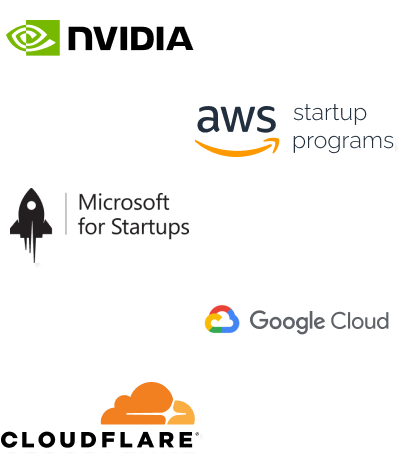
Imagine reducing your operational costs by up to $100,000 annually without compromising on the technology you rely on. Through our partnerships with leading cloud and technology providers like AWS (Amazon Web Services), Google Cloud Platform (GCP), Microsoft Azure, and Nvidia Inception, we can help you secure up to $25,000 in credits over two years (subject to approval).

These credits can cover essential server fees and offer additional perks, such as:

  • Google Workspace accounts
  • Microsoft accounts
  • Stripe processing fee waivers up to $25,000
  • And many other valuable benefits

Why Choose Our Partnership?

By leveraging these credits, you can significantly optimize your operational expenses. Whether you're a startup or a growing business, the savings from these partnerships ranging from $5,000 to $100,000 annually can make a huge difference in scaling your business efficiently.

The approval process requires company registration and meeting specific requirements, but we provide full support to guide you through every step. Start saving on your cloud infrastructure today and unlock the full potential of your business.
exclusive-partnersexclusive-partners
E-Commerce

Shopify

Hosting

Hostinger

Technology

Sentry

CMS

Hubspot

MARKETING

Semrush

HOSTING

Namecheap

Productivity

Evernote

Hosting

Bluehost

Success Stories

Explore More

E-Commerce Platform

Social Media Dashboard

Let's TALK

Let's TALK and bring your ideas to life! Our experienced team is dedicated to helping your business grow and thrive. Reach out today for personalized support or request your free quote to kickstart your journey to success.

Connect Us
Contact Now
DIGITAL PRODUCTUI/UX DESIGNDIGITAL STUDIOBRANDING DESIGNUI/UX DESIGNEMAIL MARKETINGBRANDING DESIGNUI/UX DESIGNEMAIL MARKETING
DIGITAL PRODUCTUI/UX DESIGNDIGITAL STUDIOBRANDING DESIGN

Subscribe our newsletter

Company

  • About Us
  • Portfolio
  • Game Development
  • Blogs
  • IVY
  • Services
UI/UX DESIGN
EMAIL MARKETING
BRANDING DESIGN
UI/UX DESIGN
EMAIL MARKETING
  • Contact Us
  • Our Services

    • AI Development
    • Web Development
    • Mobile App Development
    • Digital Marketing
    • IT Staff Augmentation
    • Facebook
    • Youtube
    • X
    • Linkedin
    • Instagram
    footer-logo
    • Email Now
      contact@indusvalley.io

    Copyright © 2025 Indus Valley Technologies | All rights reserved ®

    Terms & ConditionsPrivacy Policy